Your Performance Max campaign is reporting a 600% ROAS. Google Ads says you’re making six times what you spend.
But what if a significant portion of those conversions came from people who were already searching for your business by name?
You might be paying Google to capture demand your brand has already created, while assuming your advertising is generating new customers.
What’s actually going on
Performance Max runs across Search, Shopping, YouTube, Display and more, and it decides on its own where your money goes. On Search, that includes people typing your business name.
Those people already know you. They convert at a high rate for very little cost. PMax picks them up, records the sale, and its ROAS jumps. The campaign isn’t lying. It’s taking credit for sales that were coming anyway.
Here’s a simple example. PMax reports 100 sales at a 6x return. If 40 of those came from people searching your name, the campaign found 60 new sales, not 100. Same budget, very different story.
Meanwhile, the new customers you actually wanted, the ones who’ve never heard of you, get less of the budget than the report suggests.
But I already have a brand campaign
Good, you should. Google’s own rule says that if a search is identical to an exact match keyword in your Search campaign, the Search campaign wins over PMax.
Google also says PMax can still show for your branded terms even with that keyword in place, for example when your Search campaign is limited by budget or has tighter targeting. And PMax search themes get the same priority as phrase and broad match keywords, so it’s not a clean wall.
A brand campaign that runs out of budget by night quietly hands the afternoon to PMax.
How to check if it’s happening to you
Three checks, none of them complicated.
1- Look at the search insights inside PMax. Open the Insights tab and check the search categories. If your brand name sits near the top, that’s your answer.
2- Compare before and after. Look at your brand campaign’s impressions and conversions from before PMax launched. If they fell while PMax climbed, you’re not getting more sales. You’re moving the same ones between campaigns.
3- Run the test. Add brand exclusions and watch total account conversions, not PMax’s number alone. Give it a few weeks so you’re not reacting to one bad weekend. If the total barely moves, PMax was claiming credit, not creating demand.
What to do about it
1- Turn on brand exclusions in your PMax campaign settings. Google has offered this since 2023.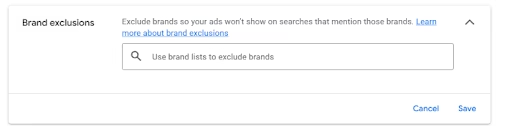
2-Keep a separate brand Search campaign on exact match, with enough budget that it never runs dry.
3- Budget caps are how PMax sneaks back in.
4- Add your brand terms as negative keywords in PMax where exclusions miss something.
5- Judge PMax on non-brand results and new customers from here on.
Expect your PMax ROAS to drop after this. That’s fine. The lower number is the real one, and it’s the one you can make decisions with.
When you might leave it alone
Not every account needs strict brand exclusions. If hardly anyone searches your name, there’s not much to protect, and some advertisers argue that blocking brand terms can cost you reach you’d otherwise get. Let your data decide, not a rule of thumb.
ROAS in the platform isn’t your profit
This is bigger than one setting. Google Ads reports what Google Ads can see. It doesn’t know which leads were junk, which buyers returned the product, or whether a customer cost you more to win than they ever paid you.
So once a brand is cleaned out, look at what’s left against the numbers that pay your bills: qualified leads, cost per acquisition, margin. Check your conversion tracking too. If it counts the wrong things, you’ll optimise toward the wrong things.
Find out how much of your ROAS is real
Your Google Ads account may be reporting strong returns, but how much of that revenue is coming from customers who already know your brand, and how much is genuinely new business?
At Crown Digital, we go beyond the numbers in your dashboard. We examine how your Performance Max and Search campaigns work together, where your budget is going, and whether your advertising is reaching new customers or simply capturing demand that already exists.
Our approach combines hands-on campaign analysis, strategic problem-solving and ongoing optimisation. You get more than campaign management. You get an advertising partner who questions the data, identifies opportunities and makes informed decisions based on your business goals.
If you’re investing in Google Ads but aren’t confident about what’s driving your results, let’s take a closer look.
Book a free 30-minute Discovery Call to discuss your campaigns, current challenges and how we can help you get more value from your advertising investment.